By Ecig News
Vape Overview
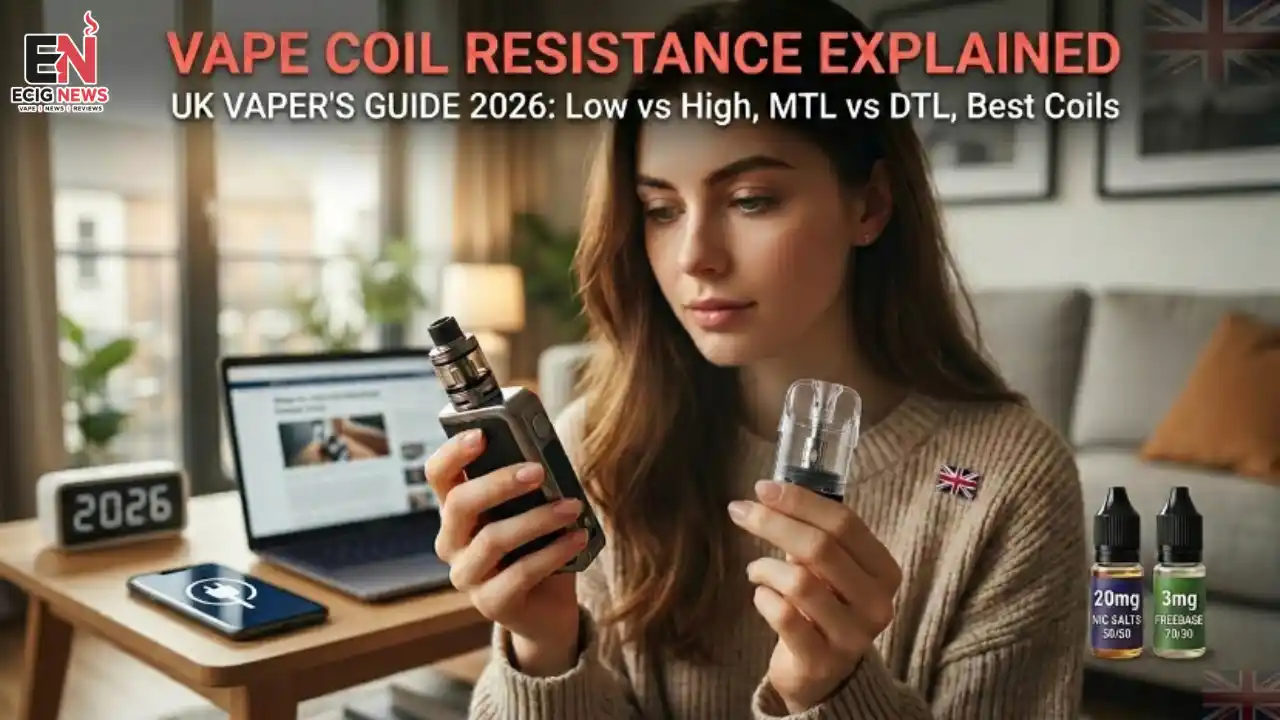
One of the first things many UK vapers find confusing is coil resistance. This is especially true after switching from disposables to refillable devices.
You install a new coil, and your vape suddenly feels different. Maybe the airflow becomes tighter. Maybe the vapour gets hotter. Sometimes flavour improves, while other times the coil burns out far too quickly.
The reason is simple. Coil resistance changes almost every part of the vaping experience. This includes flavour, vapour production, nicotine strength, battery life, and airflow style.
This Ecig News guide explains vape coil resistance in simple terms. We’ll cover how different resistances work and which coils are best for beginners.
We’ll also look at how to avoid the most common coil mistakes, helping UK vapers get the most out of their device in 2026.
Table of Contents
- What Does Vape Coil Resistance Mean?
- How Vape Coils Actually Work
- Low Resistance vs High Resistance Coils
- How Coil Resistance Changes Your Vape
- Understanding MTL, RDL, and DTL Vaping
- Which Coil Resistance Is Best for Beginners?
- Matching Nicotine Strength to Coil Resistance
- Choosing the Correct E-Liquid for Your Coil
- How Coil Resistance Affects Battery Life
- Comparing 0.6Ω and 0.8Ω Coils
- Why Vape Coils Burn Out Early
- How to Make Vape Coils Last Longer
- Common Beginner Coil Mistakes
- Final Thoughts on Vape Coil Resistance
What Does Vape Coil Resistance Mean?
Inside every vape pod or tank sits a small heating element called a coil.
When the device fires, electricity travels through the coil and heats it up. This heat turns e-liquid into vapour.
Resistance measures how easily electricity flows through that coil. It is measured in ohms, displayed using the Ω symbol.
Lower Resistance Coils
Lower resistance allows more electrical power through the coil.
This creates:
- warmer vapour
- larger clouds
- stronger flavour
- faster heating
Higher Resistance Coils
Higher resistance restricts power flow.
This creates:
- cooler vapour
- tighter airflow
- smaller clouds
- smoother nicotine delivery
In simple terms:
Low Resistance: Focuses on power and vapour production.
High Resistance: Focuses on efficiency and a cigarette-style draw.
How Vape Coils Actually Work
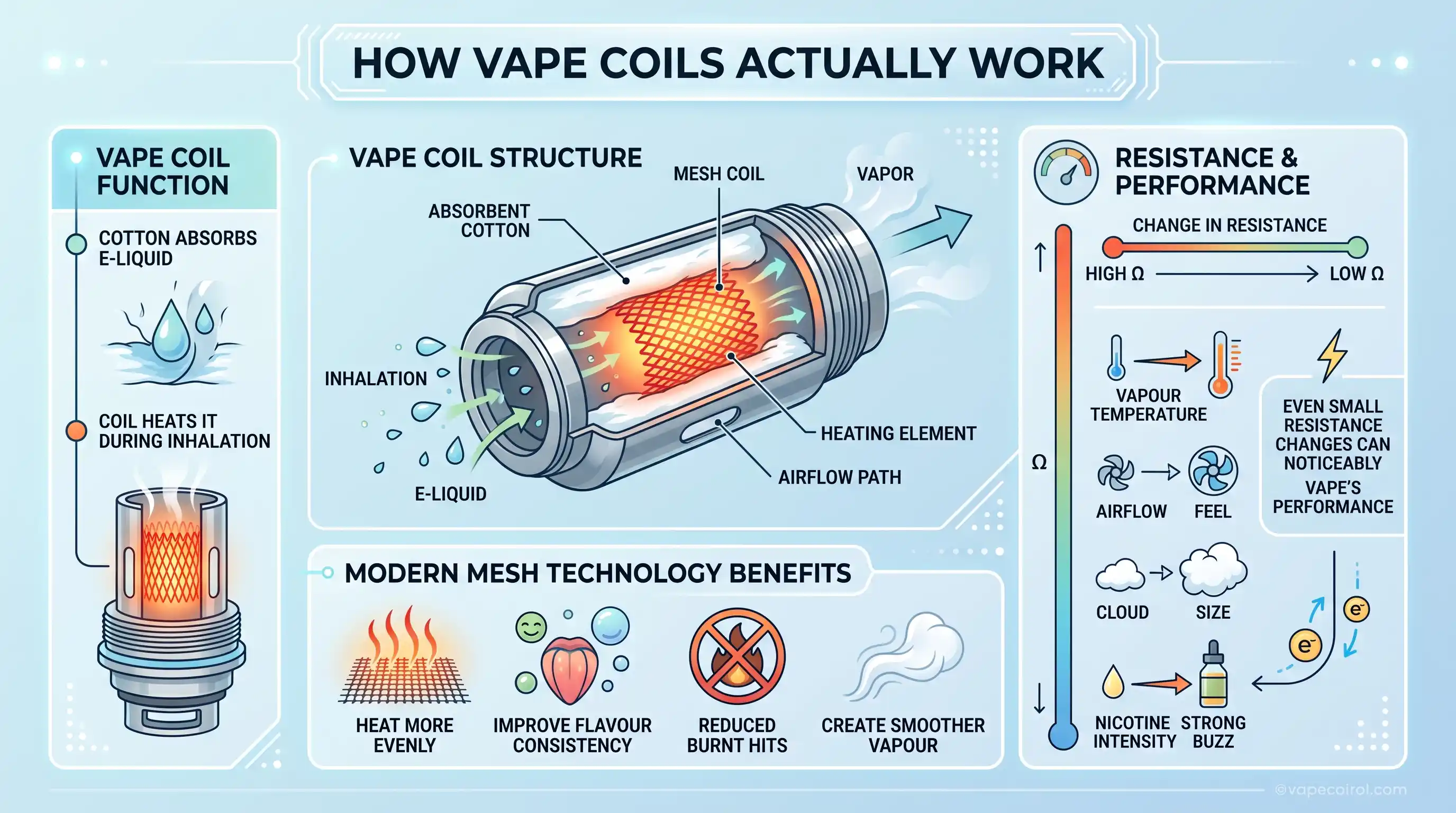
Every coil contains metal wire or mesh surrounded by absorbent cotton.
The cotton absorbs e-liquid while the coil heats it during inhalation.
Modern vape coils often use mesh technology because mesh coils:
- heat more evenly
- improve flavour consistency
- educee burnt hits
- create smoother vapour
As resistance changes, the amount of power passing through the coil changes too.
This directly affects:
- vapour temperature
- airflow feel
- cloud size
- nicotine intensity
Even small resistance changes can noticeably alter how your vape performs.
Low Resistance vs High Resistance Coils
Different coil resistances create completely different vaping experiences.
| Coil Resistance | Typical Experience |
|---|---|
| 1.2Ω and above | Tight draw, cooler vapour |
| 1.0Ω | Smooth MTL vaping |
| 0.8Ω | Balanced flavour and airflow |
| 0.6Ω | Warmer vapour and stronger flavour |
| Below 0.5Ω | Sub-ohm cloud-focused vaping |
Higher resistance coils generally feel closer to smoking cigarettes.
Lower resistance coils feel more open, warmer, and cloud-focused.
How Coil Resistance Changes Your Vape
While the numbers may seem technical, they have a big impact on your daily vaping experience.
1.2Ω Coils
These coils usually create:
- tight airflow
- cooler vapour
- minimal visible clouds
- strong nicotine satisfaction
Heavy ex-smokers often prefer this style because it feels closest to traditional cigarettes.
1.0Ω Coils
These provide:
- balanced airflow
- controlled vapour production
- smooth MTL vaping
This remains one of the most beginner-friendly resistances.
0.8Ω Coils
Many former disposable users prefer 0.8Ω because it balances:
- flavour intensity
- airflow openness
- nicotine satisfaction
- moderate cloud production
0.6Ω Coils
These create:
- warmer vapour
- stronger flavour
- larger clouds
- more open airflow
The inhale begins to feel closer to restricted direct-lung vaping.
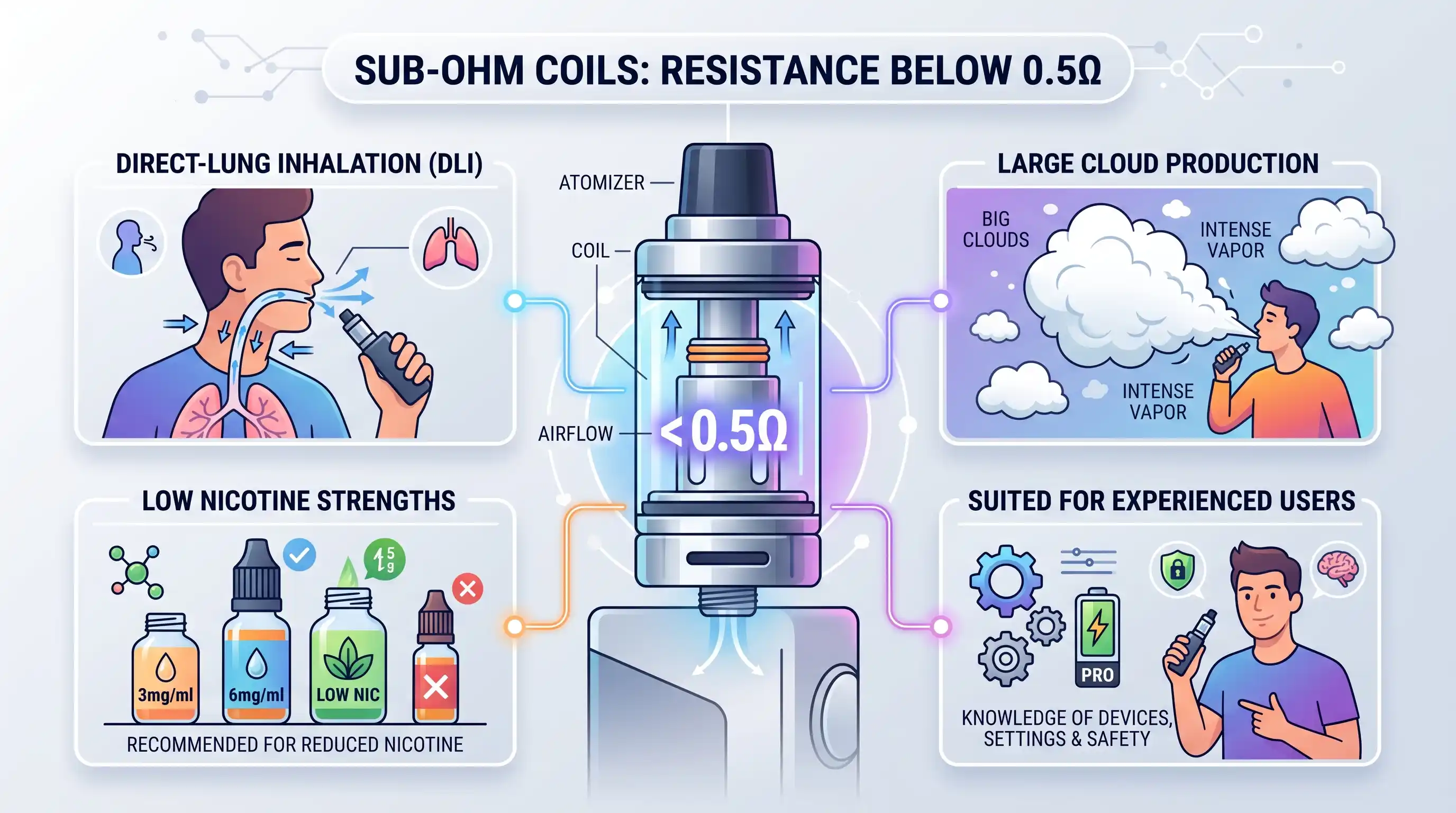
Sub-Ohm Coils
Once resistance drops below 0.5Ω, devices usually enter sub-ohm territory, designed for:
- direct-lung inhalation
- large cloud production
- low nicotine strengths
These setups are generally better suited to experienced users.
Understanding MTL, RDL, and DTL Vaping
Coil resistance strongly affects inhalation style.
Mouth-To-Lung (MTL)
MTL vaping works similarly to smoking cigarettes.
Users pull vapour into the mouth before inhaling it into the lungs.
MTL usually uses:
- 1.0Ω or higher coils
- tighter airfinto
- stronger nicotine salts
Restricted Direct Lung (RDL)
RDL sits between MTL and full DTL vaping.
RDL setups commonly use:
- 0.6Ω to 0.8Ω coils
- moderate airflow
- warmer vapour
Many disposable-style devices already feel somewhere between MTL and RDL.
Direct-To-Lung (DTL)
DTL vaping involves inhaling vapour directly into the lungs.
This style usually uses:
- sub-ohm coils below 0.5Ω
- open airflow
- high-powered devices
DTL vaping focuses heavily on flavour and cloud production.
Which Coil Resistance Is Best for Beginners?
The best coil depends on your vaping goals and smoking background.
Best for Smokers Switching to Vaping
If you want a cigarette-like inhale, higher-resistance coils usually work best.
Recommended range:
- 1.0Ω to 1.2Ω
- nicotine salts
Best for Former Disposable Users
Most disposable users adapt comfortably to:
- 0.8Ω to 1.0Ω coils
This provides a familiar balance between flavour and airflow.
Best for Flavour and Warm Vapour
Users wanting a stronger flavour often prefer:
- 0.6Ω to 0.8Ω coils
Best for Cloud Production
Large cloud setups generally use:
- sub-ohm coils below 0.5Ω
These devices usually need more experience and lower nicotine strengths.
Choosing the Correct E-Liquid for Your Coil
Different coils need different e-liquid thicknesses.
High Resistance Coils
These usually work best with:
- 50/50 VG/PG liquids
- thinner nicotine salt blends
Medium Resistance Coils
0.6Ω to 0.8Ω coils often handle:
- 50/50 liquids
- 60/40 VG/PG blends
Sub-Ohm Coils
Sub-ohm devices must use thicker liquids, such as:
- 70/30 VG/PG
- high-VG e-liquids
Thin liquids inside sub-ohm tanks often cause leaking and flooding.
How Coil Resistance Affects Battery Life
Lower-resistance coils consume significantly more battery power.
Higher Resistance Coils
A 1.0Ω coil running at low wattage may last most of the day comfortably.
Lower Resistance Coils
A 0.3Ω sub-ohm setup drains batteries much faster because it requires more power.
If battery efficiency matters to you, higher resistance setups generally perform better.
Comparing 0.6Ω and 0.8Ω Coils
This remains one of the most common coil questions among UK vapers.
0.6Ω Coil
Usually provides:
- warmer vapour
- stronger flavour
- larger clouds
- more open inhale
0.8Ω Coil
Usually provides:
- smoother airflow
- cooler vapour
- better battery life
- stronger nicotine compatibility
Neither option is universally better. The right choice depends entirely on your preferred vaping style.
Why Vape Coils Burn Out Early
Most vape coils last around one to two weeks, but poor habits can shorten their lifespan dramatically.
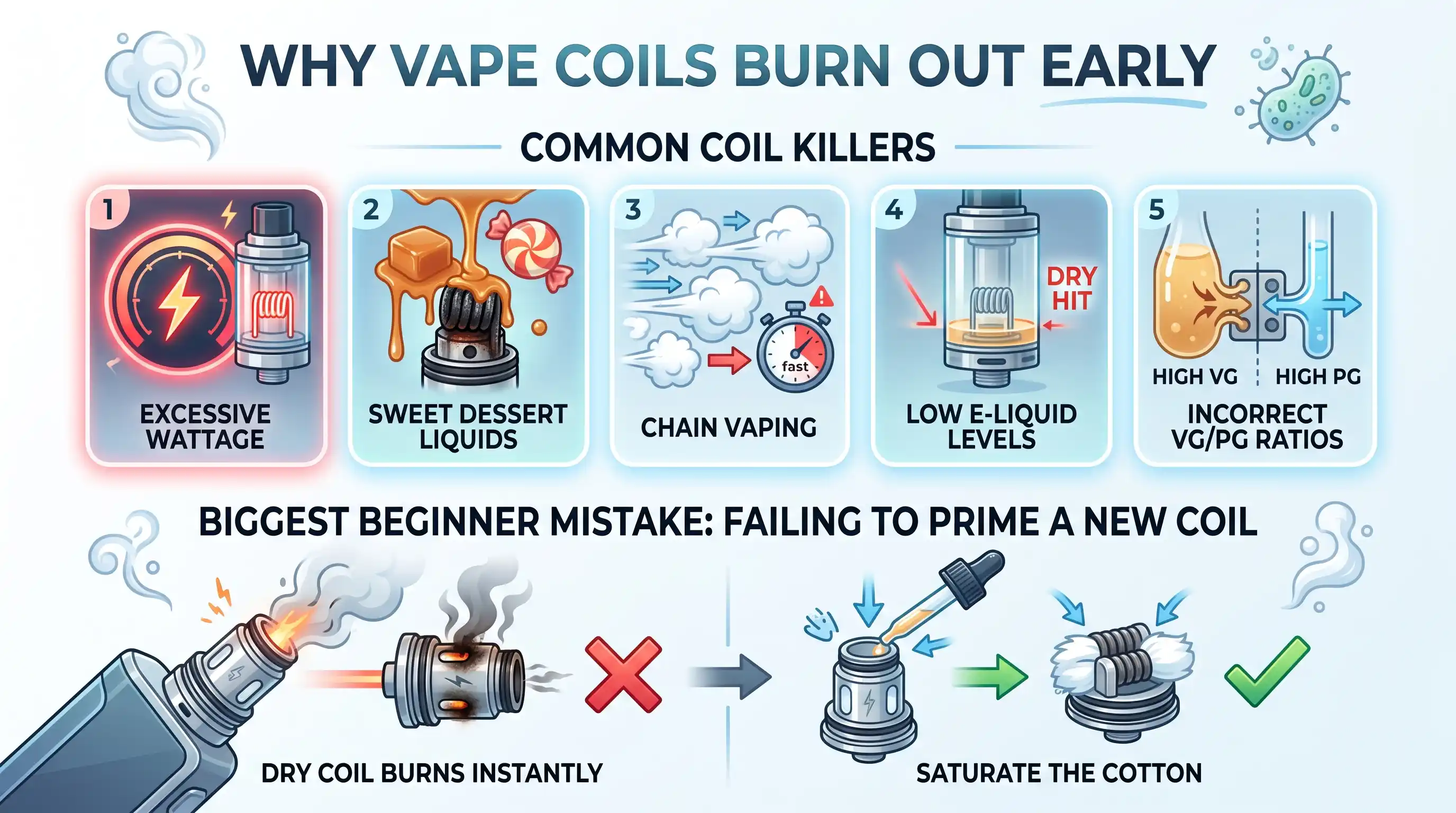
Common Coil Killers
- excessive wattage
- sweet dessert liquids
- chain vaping
- low e-liquid levels
- incorrect VG/PG ratios
One of the biggest beginner mistakes is failing to prime a new coil properly before use.
A dry coil can burn almost instantly.
How to Make Vape Coils Last Longer
Good maintenance habits improve coil lifespan significantly.
Helpful Coil Tips
- Stay within recommended wattage ranges
- Avoid chain vaping
- Keep pods filled properly
- Use the correct e-liquid thickness
- rotate sweet flavours occasionally
- prime coils before first use
Small maintenance habits prevent many common vaping problems.
Common Beginner Coil Mistakes
Many new vapers accidentally create problems by mismatching coils and e-liquids.
Using High Nicotine in Sub-Ohm Devices
This often creates excessive harshness and discomfort.
Using Thick Liquids in Small Coils
High-VG liquids inside high-resistance coils often cause dry hits.
Ignoring Wattage Recommendations
Excessive wattage burns cotton quickly.
Continuing to Vape Burnt Coils
Burnt coils should be replaced immediately rather than pushed further.
Final Thoughts on Vape Coil Resistance
Vape coil resistance controls nearly every part of your vaping experience.
It affects:
- vapour warmth
- flavour intensity
- airflow style
- battery life
- nicotine delivery
- cloud production
By choosing the right resistance, beginners can steer clear of common frustrations. These include issues like leaking, burnt coils, weak flavour, or harsh throat hits.
For most smokers switching to vaping, higher-resistance coils remain the easiest starting point. This allows them to find their ideal vape settings over time.
At Ecig News, we always recommend matching your coil resistance, nicotine strength, and e-liquid type properly.
Balanced setups create the smoothest and most satisfying vaping experience.