Key Information
Counterfeit vapes have become one of the most serious hidden problems in the UK vaping market. On the surface, many of these products look identical to popular branded devices. They use similar packaging, logos, and even matching flavour names. But inside, the quality and safety standards are completely different.
For most users, the challenge is not identifying a fake after damage is done. It is spotting it before use.
At Ecig News, we’ve seen a rising number of cases where users unknowingly buy counterfeit or unregulated devices. Many of these are bought from unofficial sellers. The price looks attractive. The packaging appears correct. And everything seems normal—until performance or safety issues begin.
This guide explains how counterfeit vapes work, why they exist, and how you can protect yourself in 2026.
Table of Contents
- Why Counterfeit Vapes Are Increasing in the UK
- What Counts as a Fake Vape Device
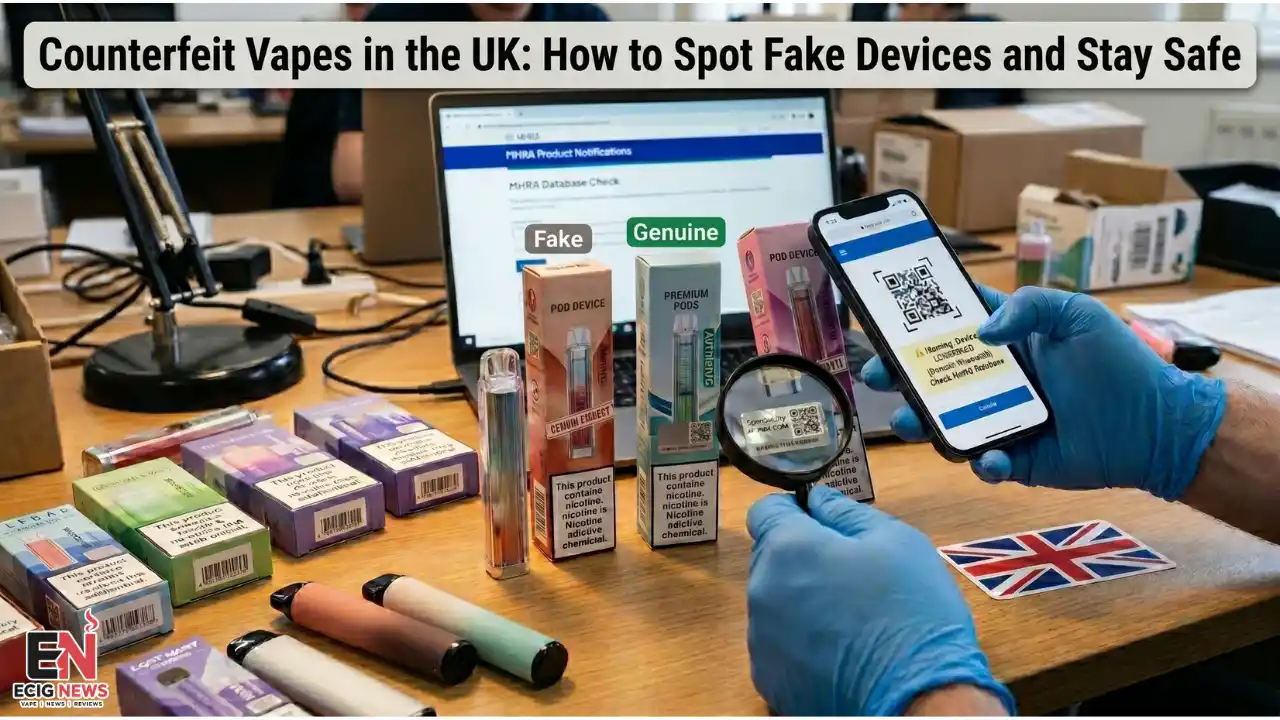
- Packaging Clues That Reveal Counterfeits
- QR Codes, Scratch Checks, and Verification Systems
- Build Quality Differences Between Real and Fake Devices
- Battery Safety Risks in Counterfeit Vapes
- E-Liquid Safety and Hidden Ingredient Risks
- MHRA and TPD Compliance Explained
- How Fake Vapes Enter the UK Market
- Health Risks Linked to Counterfeit Devices
- What to Do If You Accidentally Buy a Fake Vape
- How to Protect Yourself When Buying Vapes Online
- Real vs Fake Vape Comparison Guide
- Frequently Asked Questions
- Final Thoughts
Why Counterfeit Vapes Are Increasing in the UK
The UK vape market is highly regulated, which makes genuine products more expensive to produce. This creates a gap in the market that counterfeit manufacturers try to exploit.
Fake vape producers avoid compliance costs, safety testing, and regulatory approvals. This allows them to sell products at lower prices while copying popular brands.
Another reason is the rise of online marketplaces and informal sellers. These platforms often lack strict verification processes. This allows imitation products to circulate more easily.
As demand for popular devices increases, so does the incentive to produce fake versions.
What Counts as a Fake Vape Device
A counterfeit vape is any product designed to imitate a genuine branded device. They are produced without authorisation from the original manufacturer.
These devices often replicate:
- Brand logos
- Packaging design
- Flavour names
- Device shape and colour
However, the internal components are usually different. This includes lower-quality batteries, untested coils, and unregulated e-liquid.
Some products are not direct counterfeits but “grey imports” made for other regions. These still fail UK compliance rules.
Packaging Clues That Reveal Counterfeits
Packaging is often the first and easiest way to detect a fake vape.
Genuine products usually have high-quality printing with consistent fonts. They also feature clear warning labels and properly aligned branding.
Fake products often show small but noticeable flaws. These can include spelling mistakes, faded colours, uneven logos, or low-resolution printing.
Safety labels may also be missing or incorrectly formatted. In some cases, warning text appears slightly different from official UK versions.
QR Codes, Scratch Checks, and Verification Systems
Most legitimate vape brands include a verification system. This is usually in the form of a QR code or scratch-and-check panel.
Scanning the code should lead to the official brand website or a verification page. This will confirm the product’s authenticity.
Fake products often fail at this step. The QR code may not work, may redirect to an unrelated website, or may repeat the same result for multiple products.
Some counterfeiters even copy real codes. In such cases, repeated verification attempts across multiple devices will show inconsistencies.
Build Quality Differences Between Real and Fake Devices
Physical inspection can reveal major differences.
Authentic vape devices feel solid, well-assembled, and consistent in airflow and vapour output. Buttons, pods, and connections fit tightly without looseness.
Counterfeit devices often feel lighter or poorly constructed. Common issues include weak magnetic pod connections, uneven airflow, and inconsistent vapour production.
Users may also notice unusual noise, overheating, or irregular performance during use.
Battery Safety Risks in Counterfeit Vapes
Battery quality is one of the most serious risks in fake vapes.
Genuine devices use regulated lithium-ion batteries with built-in safety protections. Counterfeit versions often use cheap, untested batteries without proper safeguards.
This can lead to overheating, leakage, or, in rare cases, device failure.
Signs of battery risk include rapid heating, inconsistent charging, or swelling of the device casing.
E-Liquid Safety and Hidden Ingredient Risks
One of the biggest concerns with counterfeit vapes is the unknown composition of the e-liquid.
Unlike regulated products, fake devices aren’t required to disclose accurate ingredients. They also don’t need to list their true nicotine levels.
This can result in:
- Incorrect nicotine strength
- Harsh chemical taste
- Unknown additives
- Poor-quality flavouring agents
Because these liquids are untested, the health impact is unpredictable.
MHRA and TPD Compliance Explained
In the UK, all legal vape products must follow TPD regulations and be registered with the MHRA.
This includes strict rules such as:
- Maximum 20mg nicotine strength
- 2ml tank or pod capacity
- 10ml nicotine bottle restrictions
- Child-safe packaging and health warnings
Any product not listed or registered under MHRA guidelines is not legally approved for UK sale.
How Fake Vapes Enter the UK Market
Counterfeit products typically enter the UK through unofficial import channels.
- Unverified online sellers: These vendors operate outside of official retail channels.
- Lack of regulatory oversight: Online sellers may not be subject to the same strict regulations.
- Social media listings: Unregulated products are often sold on social media platforms like Facebook Marketplace or Instagram. These sales are made directly to consumers.
- Third-party marketplaces: Some websites that host multiple sellers may not adequately verify the authenticity of the stock being sold.
Authorised retailers have a higher level of regulatory oversight.
Some products are also rebranded versions of overseas stock that do not meet UK standards but are still sold locally.
Health Risks Linked to Counterfeit Devices
Using counterfeit vapes can lead to multiple risks.
These include exposure to unregulated chemicals, nicotine inconsistencies, and potential respiratory irritation.
Battery failures can also pose physical safety risks.
While not every fake device causes immediate harm, the lack of regulation means there is no safety guarantee.
What to Do If You Accidentally Buy a Fake Vape
If you suspect your vape is counterfeit, stop using it immediately.
Do not attempt to refill or recharge the device further.
Dispose of it safely according to local electronic waste guidelines.
It is also recommended to report the seller and switch to verified UK retailers moving forward.
How to Protect Yourself When Buying Vapes Online
The safest approach is prevention.
Only buy from verified UK retailers with established reputations. Avoid unusually cheap deals. Counterfeit products are often priced just below market value to appear legitimate.
Always check packaging quality, QR verification, and MHRA compliance before first use.
Real vs Fake Vape Comparison Guide
Real vape devices typically have consistent branding, verified QR codes, regulated nicotine levels, and solid build quality.
Fake vapes often show inconsistencies in packaging and may be missing verification systems. They also tend to have poor performance and unreliable battery behaviour.
Even small differences in finish or flavour consistency can indicate a counterfeit product.
Frequently Asked Questions
How can I tell if a vape is fake?
You can identify fake vapes by checking key authenticity markers. Genuine products usually have high-quality packaging with no spelling mistakes, a verifiable QR or scratch code, and proper MHRA registration details. If the packaging looks cheap or the verification code does not match the official website, it is likely counterfeit.
Are fake vapes dangerous?
Yes, fake vapes can be very dangerous. They may contain unregulated or unknown chemicals, poor-quality e-liquid, and unsafe battery components. Using fake vapes can lead to several dangers, including:
- Health issues from inhaling harmful substances
- Device failures like overheating
- Potential battery explosions
Can fake vapes look identical to real ones?
Yes, many counterfeit vapes are designed to closely imitate genuine branding and packaging. Pay close attention to things like print quality, serial code verification, and the product’s finish.
Where are counterfeit vapes usually sold?
They are often sold through:
- Unverified online marketplaces
- Social media sellers
- Informal retail channels
Final Thoughts
Counterfeit vapes remain a growing issue in the UK vaping market. While they might look like the real deal, their internal quality and safety standards are worlds apart.
The safest approach is awareness and verification. If a product cannot be confirmed through official channels, packaging checks, or MHRA listings, treat it with caution.
At Ecig News, we strongly recommend sticking to verified UK retailers. Treat unusually cheap vape deals as a warning sign rather than an opportunity.