By Ecig News
Everything You Should Know
For several years, disposable vapes dominated the UK vaping scene. They were convenient, portable, and easy to use. These features helped millions of adult smokers switch from traditional cigarettes.
You could buy one, open the packaging, take a puff, and start vaping immediately. There was no charging, refilling, or maintenance involved.
That simplicity made disposable vapes incredibly popular.
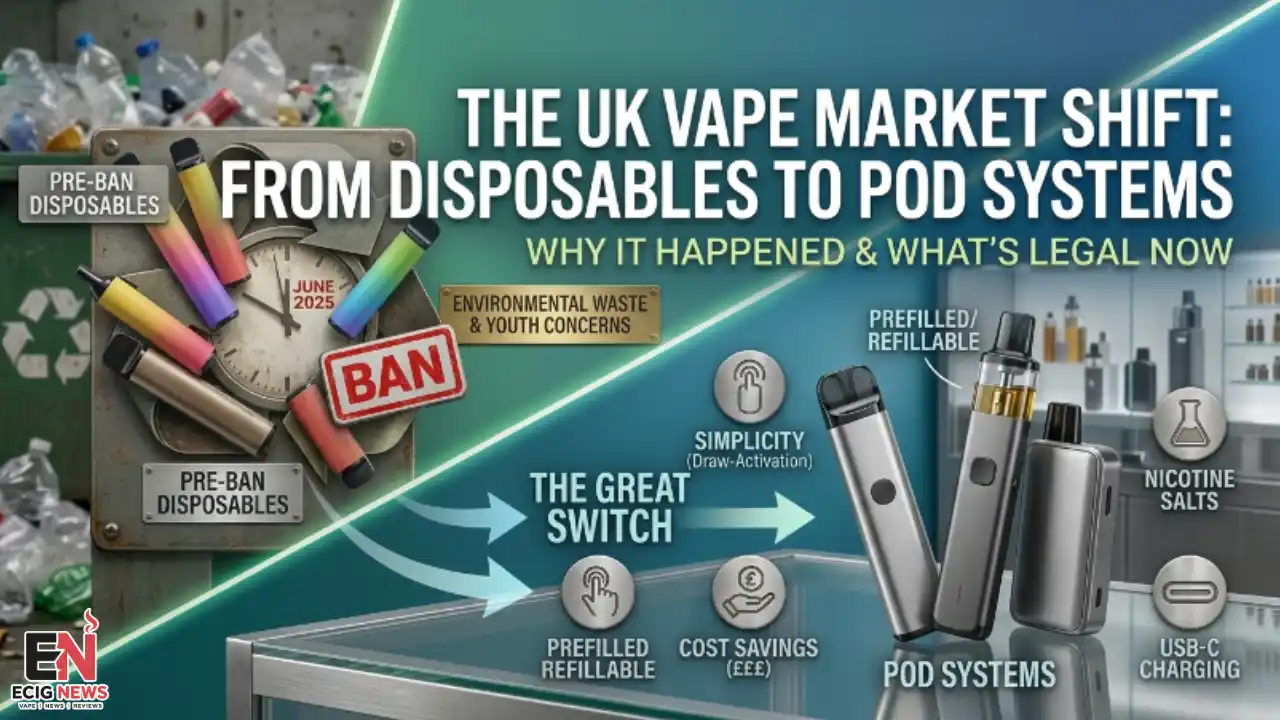
However, everything changed in June 2025. That’s when the UK government introduced a nationwide ban on disposable vape products.
The decision triggered one of the biggest shifts the vaping industry has ever experienced. Millions of users were forced to find alternative devices almost overnight.
This guide explains why disposable vapes were banned and what products remained legal. We’ll also cover how rechargeable pod systems became the new standard for UK vapers.
This Ecig News beginner’s guide explains how to choose your first vape flavour.
Table of Contents
- How Disposable Vapes Became So Popular
- Why the UK Introduced the Ban
- What Products Were Actually Banned?
- What Stayed Legal After the Ban?
- What Disposable Vape Users Wanted From Replacements
- Why Pod Systems Became the Leading Alternative
- The Three Phases of the UK Vape Market Shift
- Comparing Costs After the Ban
- Prefilled Pods vs Refillable Pods
- Environmental Impact and Sustainability
- Common Misconceptions About Pod Systems
- What the Future Looks Like for UK Vapers
- Frequently Asked Questions
- Final Thoughts
How Disposable Vapes Became So Popular
Disposable vapes succeeded because they removed nearly every obstacle associated with traditional vaping.
Users did not need to learn about:
- batteries
- coil replacements
- e-liquid refills
- power settings
- maintenance
Everything came ready to use.
Strong flavours and affordable prices made them an attractive option. As a result, disposables quickly became the go-to for many smokers and casual vapers.
This combination of factors made them an easy entry point into vaping.
Why the UK Introduced the Ban
The disposable vape ban officially came into force on 1 June 2025.
The decision was primarily driven by two major concerns.
Environmental Waste
Millions of disposable vapes were being discarded every week throughout the UK.
Each device contained:
- lithium batteries
- electronic components
- plastic materials
Because most were not recycled correctly, regulators became increasingly concerned. The main worry was the growing environmental impact.
Youth Vaping Concerns
Officials also raised concerns about underage access to vaping products.
Disposable devices were often criticised because they were:
- inexpensive
- widely available
- colourful
- Heavily marketed around sweet flavours.
The government argued that these factors increased their appeal among younger audiences.
What Products Were Actually Banned?
One of the biggest misconceptions after the ban was that vaping itself had become illegal.
That was never the case.
The regulation specifically targeted:
- single-use disposable vapes
- non-rechargeable vape devices
- fully sealed throwaway products
The ban did not affect all vaping products.
What Stayed Legal After the Ban?
Several categories remained fully legal for adult users.
These include:
- rechargeable pod kits
- refillable pod systems
- prefilled pod devices
- nicotine salt e-liquids
- Rechargeable big puff vape kits
As a result, many users simply switched to alternative products rather than quitting vaping altogether.
What Disposable Vape Users Wanted From Replacements
Most former disposable users were not looking for complicated vaping systems.
They wanted devices that could deliver a similar experience with minimal disruption.
Three priorities emerged.
Simplicity
Users wanted products that remained easy to operate.
Most people had no interest in:
- advanced settings
- coil building
- large box mods
- technical maintenance
Strong Nicotine Satisfaction
Many disposable users relied on 20mg nicotine salts.
Replacement devices needed to deliver the same smooth nicotine experience.
Familiar Draw Style
Disposable devices typically use a mouth-to-lung inhale similar to smoking.
Users wanted alternatives that felt familiar.
Why Pod Systems Became the Leading Alternative
Rechargeable pod systems quickly filled the gap left by disposables.
They preserved many of the features users already enjoyed while solving several of the concerns that led to the ban.
Easy to Use
Most pod systems remain draw-activated.
Users simply:
- Charge the battery
- insert a pod
- inhale
The learning curve is minimal.
Continued Nicotine Salt Support
Most pod devices continue using nicotine salts. Users can maintain the same level of nicotine satisfaction. They get the same experience as they did with disposables.
Familiar Flavours
Many of the UK’s most popular disposable flavours remain available in pod form, including:
- Blue Razz
- Strawberry Ice
- Mango Ice
- Watermelon blends
- Mint flavours
Fast USB-C Charging
Modern devices typically recharge within 30 to 60 minutes. This helps maintain the convenience users expect.
The Three Phases of the UK Vape Market Shift
Phase One: Disposable Vape Growth
Single-use devices became the dominant product category because of their simplicity and accessibility.
Phase Two: Rise of Prefilled Pod Kits
Following the ban, prefilled pod systems became the easiest replacement.
They continued offering:
- inhale activation
- nicotine salts
- compact designs
- minimal maintenance
Phase Three: Expansion of Refillable Systems
As users gained confidence, many transitioned to refillable pod devices.
These systems offered:
- lower running costs
- greater flavour variety
- adjustable nicotine strengths
Despite offering more flexibility, they remained much simpler than traditional advanced vape kits.
Comparing Costs After the Ban
Many former disposable users were surprised by how much money they could save after switching.
Typical Annual Costs
| Device Type | Weekly Cost | Monthly Cost | Annual Cost |
|---|---|---|---|
| Disposable Vapes | £35-£98 | £140-£392 | £1,680-£4,704 |
| Prefilled Pod Systems | £10-£20 | £40-£80 | £480-£960 |
| Refillable Pod Systems | £6-£10 | £24-£40 | £288-£480 |
For regular users, rechargeable devices often become significantly more economical.
Prefilled Pods vs Refillable Pods
Both categories became increasingly popular after the ban, but they suit different types of users.
Prefilled Pod Systems
Best suited for:
- beginners
- former disposable users
- convenience-focused vapers
Advantages:
- no refilling
- no coil changes
- minimal maintenance
Refillable Pod Systems
Best suited for:
- regular vapers
- flavour enthusiasts
- budget-conscious users
Advantages:
- lower ongoing costs
- wider flavour selection
- flexible nicotine options
Many users start with prefilled systems before eventually moving to refillable devices.
Environmental Impact and Sustainability
Environmental concerns were one of the main reasons behind the ban.
Because the battery can be used for months, rechargeable devices produce a lot less waste. The battery isn’t thrown away after just a few hundred puffs.
Although refillable systems still generate some waste through:
- pods
- coils
- bottles
They remain significantly more sustainable than single-use devices.
Common Misconceptions About Pod Systems
“Pod Kits Are Too Complicated”
Modern pod systems are designed with beginners in mind and are often nearly as simple as disposables.
“Pods Leak All the Time”
Manufacturers have significantly improved pod design in recent years, reducing leakage problems.
“The Flavour Isn’t as Good”
Many pod systems now use mesh coil technology. This delivers flavour quality that rivals or even exceeds disposable devices.
“They Don’t Feel the Same”
Most pod systems continue to offer:
- nicotine salts
- MTL airflow
- draw activation
making the transition feel very familiar.
What the Future Looks Like for UK Vapers
The UK vaping market is clearly moving towards rechargeable solutions.
Manufacturers continue improving:
- battery performance
- charging speeds
- flavour delivery
- pod longevity
- device efficiency
As technology improves, former disposable users are discovering something new. Rechargeable devices can offer a superior experience.
What initially felt like a forced change has become a positive upgrade for many vapers.
Frequently Asked Questions
Why were disposable vapes banned in the UK?
The ban was introduced because of environmental concerns. It was also a response to increasing worries about youth vaping.
Is vaping still legal in the UK?
Yes. The ban only affected single-use disposable devices, not vaping as a whole.
What is the best replacement for disposable vapes?
For most users, prefilled pod systems offer the easiest transition.
Are rechargeable pod kits cheaper?
Yes. Most users spend considerably less over time compared with buying disposables regularly.
Do pod systems use nicotine salts?
Yes. This allows them to offer smooth nicotine delivery and quick satisfaction, similar to disposable vapes.
Final Thoughts
The disappearance of disposable vapes marked a major turning point for the UK vaping industry.
Many users were initially worried about the change. However, rechargeable pod systems have proven to be a practical and cost-effective replacement.
They keep many of the features that made disposables popular:
- simplicity
- portability
- nicotine satisfaction
- familiar vaping styles
while reducing waste and lowering long-term costs.
At Ecig News, we’ve seen thousands of former disposable users successfully make the switch. Throughout 2026, they’ve transitioned to pod systems with ease. For many, the move has not only saved money but also delivered a better vaping experience.
The ban may have ended the era of disposable vapes, but it also accelerated the growth of a more sustainable and more advanced vaping market.