By Ecig News
Here’s What to Know
If you have recently browsed vape products online or visited a vape shop, you have probably seen the phrase “TPD Compliant.” It often appears on packaging, in product descriptions, or on retailer websites.
For many vapers, especially beginners, the term can sound technical and confusing.
What exactly does it mean?
Is it just a marketing phrase?
And why is it important when choosing a vape product in the UK?
The short answer is simple. A TPD-compliant vape product meets the legal standards required for sale in the UK. These regulations are designed to improve product safety, quality control, and consumer protection.
This Ecig News guide explains vape coil resistance in simple terms. This guide explains what TPD compliance means and why these regulations exist. It also covers how they affect everyday vaping and how to identify legal vape products in 2026.
Table of Contents
- What Does TPD Mean?
- Understanding UK Vape Regulations
- Why TPD Compliance Matters
- Key Rules Every UK Vaper Should Know
- Nicotine Limits Explained
- Pod, Tank, and Bottle Restrictions
- Why Products Must Be Registered
- TPD Rules After Brexit
- How to Identify a Legal UK Vape
- Common Illegal Vape Warning Signs
- How Regulations Affect Everyday Vaping
- Frequently Asked Questions
- Final Thoughts
What Does TPD Mean?
TPD stands for Tobacco Products Directive. It’s a set of rules first brought in by the European Union. These rules cover tobacco and vaping products.
Its purpose was to create consistent standards for:
- product safety
- ingredient disclosure
- nicotine limits
- packaging requirements
- consumer protection
Although the UK left the European Union, the main vaping regulations remained in place through UK legislation.
Today, these rules continue to apply under UK law.
Understanding UK Vape Regulations
In the UK, vaping products are regulated under the Tobacco and Related Products Regulations 2016 (TRPR).
These regulations govern:
- nicotine-containing e-liquids
- vape devices
- refill containers
- pod systems
- packaging requirements
Before a nicotine vape product can be legally sold in the UK, it must meet these regulatory standards.
This process helps ensure products entering the market meet established safety requirements.
Why TPD Compliance Matters
Many people assume TPD compliance is simply a marketing label.
In reality, it represents a product’s compliance with UK legal standards.
TPD-compliant products are required to:
- follow nicotine limits
- Provide ingredient information
- meet packaging requirements
- undergo regulatory notification
- include safety warnings
These rules help consumers avoid unsafe or unregulated products.
Key Rules Every UK Vaper Should Know
Several important rules apply to nicotine vape products sold legally in the UK.
Greatest Nicotine Strength
The highest legal nicotine strength permitted is:
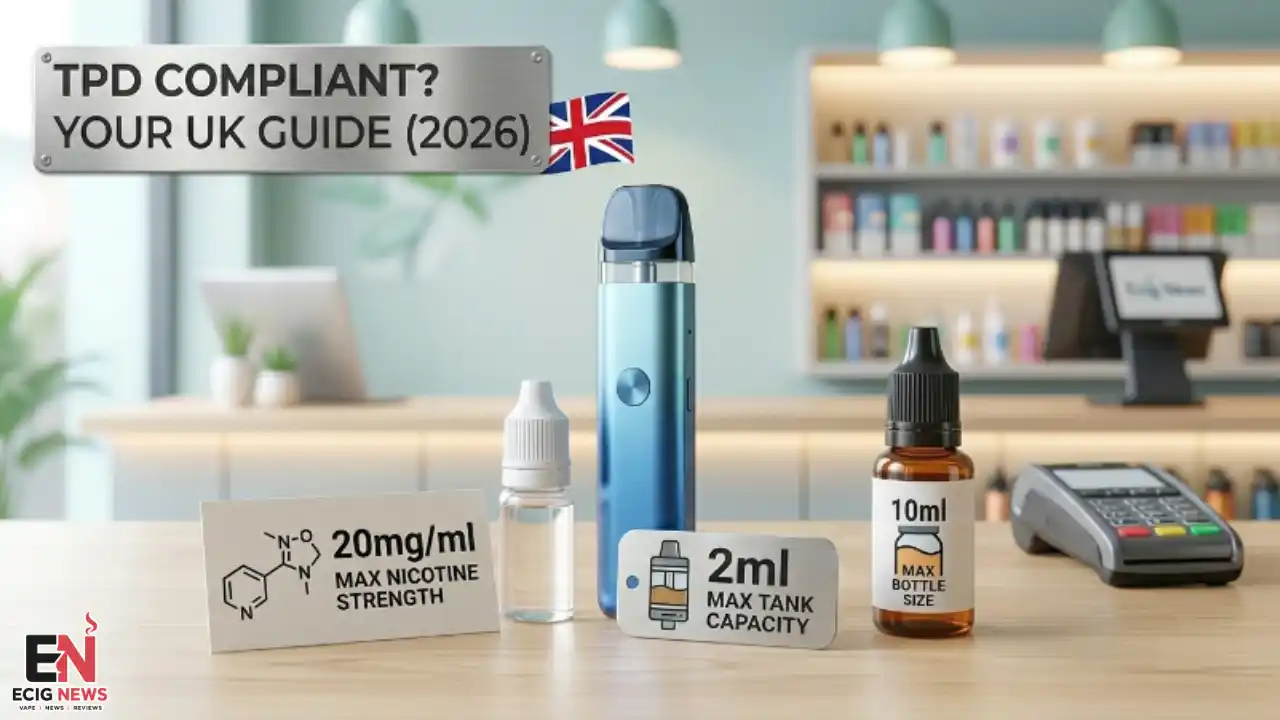
20mg/ml (2%)
This applies to:
- nicotine salts
- freebase nicotine
- prefilled pods
- disposable alternatives
- refill bottles
Products exceeding this limit cannot legally be sold in the UK.
Greatest Pod and Tank Capacity
Pods and tanks containing nicotine e-liquid are limited to:
2ml capacity
This rule applies across most nicotine vape devices sold within the UK market.
Nicotine Bottle Limits
Nicotine-containing refill bottles cannot exceed:
10ml capacity
Larger nicotine bottles are not permitted under UK regulations.
Why Nicotine Limits Exist
Many vapers ask why nicotine strength is restricted to 20mg.
The reasoning is largely based on consumer safety.
Higher nicotine concentrations may increase the risk of:
- dizziness
- nausea
- excessive nicotine intake
- stronger dependency
The 20mg limit aims to balance effective nicotine delivery while reducing unnecessary risks.
Many adult smokers transitioning to vaping find this strength effective. 20mg nicotine salts can be enough for managing cravings.
Why Products Must Be Registered
Before a product can legally enter the UK vape market, manufacturers must provide information to regulators.
This includes details about:
- ingredients
- nicotine content
- emissions
- packaging
- product design
This registration process creates accountability and helps authorities check product safety.
If concerns arise later, regulators can identify and investigate affected products.
TPD Rules After Brexit
A common misconception is that vaping regulations disappeared after Brexit.
This is not true.
The UK retained its vaping regulations through domestic legislation.
As a result:
- Nicotine limits remain unchanged
- pod restrictions remain unchanged
- registration requirements remain unchanged
The main difference is that the UK now manages its own regulatory system independently.
Products intended for sale in the UK must meet UK requirements. This is true even if they follow regulations elsewhere.
How to Identify a Legal UK Vape
Legitimate products generally display several key indicators.
Signs of a Compliant Product
- nicotine strength at or below 20mg
- appropriate health warnings
- manufacturer information
- batch details
- child-resistant packaging
- regulatory compliance information
Purchasing from reputable UK retailers is a good way to stay safe. It greatly reduces the risk of buying non-compliant products.
Common Illegal Vape Warning Signs
Certain red flags or show ndicate that a product does not follow UK regulations.
Warning Signs
- nicotine strengths above 20mg
- oversized nicotine pods
- unusually large nicotine bottles
- missing safety warnings
- unclear manufacturer details
- products sourced from unknown sellers
Extra caution should be exercised when buying from unverified online marketplaces.
How Regulations Affect Everyday Vaping
For most users, compliance affects vaping in practical ways.
Smaller Pods
The 2ml pod limit means users may refill or replace pods more often than they would under unrestricted systems.
Nicotine Strength Choices
Users cannot legally buy extremely high-strength products commonly found in some international markets.
Product Consistency
Consumers benefit from more consistent product quality and safety standards.
Upcoming Industry Changes
Future regulations and taxation changes may affect the UK vape market. These adjustments could influence pricing and product availability.
However, TPD compliance remains the foundation of the legal UK vaping market.
Frequently Asked Questions
What does TPD-compliantBuy mean?
It means a vape product meets the legal standards required for sale in the UK.
Is TPD compliance mandatory?
Yes. Nicotine vape products must comply with UK regulations before they can be legally sold.
What is the greatest legal nicotine strength in the UK?
20mg/ml (2%).
Are 50mg nicotine vapes legal in the UK?
No. Products exceeding 20mg nicotine strength cannot legally be sold within the UK.
Does Brexit change vape regulations?
The UK retained its core vaping regulations after Brexit, although future changes may differ from EU rules.
How can I check if a vape is legal?
Always buy from trusted UK retailers.
Check that the product displays the correct regulatory information and warnings.
Final Thoughts
TPD compliance is far more than a label printed on vape packaging.
It represents a regulatory framework designed to improve:
- consumer safety
- product quality
- transparency
- accountability
Regulations sometimes limit product specifications. However, they also help create a more reliable marketplace for UK consumers.
For most vapers, the simplest approach remains straightforward:
- Buy from established UK retailers
- Avoid unusually high nicotine products
- check packaging carefully
- Choose properly regulated devices
As the UK vaping industry continues to evolve through 2026 and beyond, TPD compliance will remain crucial. It is one of the most important indicators that a product meets recognised legal standards.
At Ecig News, we will continue to check changes across the UK vaping landscape. We are committed to providing straightforward guidance to help vapers make informed decisions.