By Ecig News
Here’s What to Know
Selecting a vape device is only one part of building a good vaping experience. The type of e-liquid you use is just as important. One of the most overlooked factors is the PG/VG ratio printed on every bottle. The PG VG ratio affects flavour, vapour, throat hit, and coil performance.
For more UK vaping guides, product reviews, and industry updates, explore Ecig News for the latest information.
Many new vapers see numbers like 50/50, 70/30, or 80/20 and assume they relate to nicotine strength. In reality, these figures describe the balance between the two base ingredients in almost every vape juice. The vg/pg ratio affects how thick or thin your e-liquid feels in a vape device.
The ratio you choose affects:
- flavour strength
- throat sensation
- vapour production
- coil performance
- nicotine delivery
- device compatibility
Using the wrong ratio can lead to leaking pods, poor flavour, burnt coils, or disappointing vapour production. For most pod users, the best VG PG ratio is 50/50 because it provides a good balance of flavour and vapour. This guide explains what PG and VG are, how different ratios affect vaping, and how to choose the best e-liquid for your device and vaping style. If you’re new to vaping, you may wonder what is VG and PG and why both are used in vape juice.
TABLE OF CONTENTS
- Quick Overview
- What Do PG and VG Mean?
- Understanding Propylene Glycol (PG)
- Understanding Vegetable Glycerin (VG)
- How PG and VG Affect Vaping
- Common PG/VG Ratios Explained
- Best Ratios for Pod Systems
- Best Ratios for Sub-Ohm Vaping
- Matching PG/VG Ratios to Your Vaping Style
- Nicotine Salts and PG/VG Ratios
- Potential Side Effects of PG and VG
- Quick Ratio Comparison Table
- Frequently Asked Questions
- Final Thoughts
QUICK OVERVIEW
✓ The PG/VG ratio describes the balance of propylene glycol (PG) and vegetable glycerin (VG), affecting flavour, throat hit, vapour production, and e-liquid thickness.
✓ 50/50 PG/VG is a popular choice for pod kits and lower-powered devices, offering a balanced experience and good wicking through smaller coils.
✓ Higher PG liquids are typically thinner with more flavour and throat hit, while higher VG liquids are thicker and produce more vapour with a smoother inhale.
✓ The right PG/VG ratio depends on your device, coil resistance, and vaping style. Always check your device manufacturer’s recommendations before choosing an e-liquid.
What Do PG and VG Mean?
If you are new to vaping, you may wonder what is VG and PG and why both ingredients are used in vape juice. The right PG/VG ratio depends on your vape device and vaping style. Every standard vape liquid contains two main ingredients:
- Propylene Glycol (PG)
- Vegetable Glycerin (VG)
These ingredients form the base of the e-liquid and are mixed with flavourings and nicotine.
The pg/vg ratio can change the flavour, throat hit, vapour production, and overall performance of your vape. What is VG and PG is a common question for beginners choosing their first vape juice. These two ingredients form the base of most e-liquids.
Some liquids focus on flavour and throat hit, while others prioritise smoothness and cloud production. A 50/50 blend is often considered the best VG PG ratio for smaller coils and lower-powered pod devices.
Understanding Propylene Glycol (PG)
Propylene Glycol is a thin, clear liquid that carries flavour very effectively. Choosing the right vg/pg ratio also helps your coil wick the e-liquid properly.
Because of its low viscosity, it travels through smaller coils and wicks quickly, making it ideal for compact pod devices.
Benefits of Higher PG Liquids
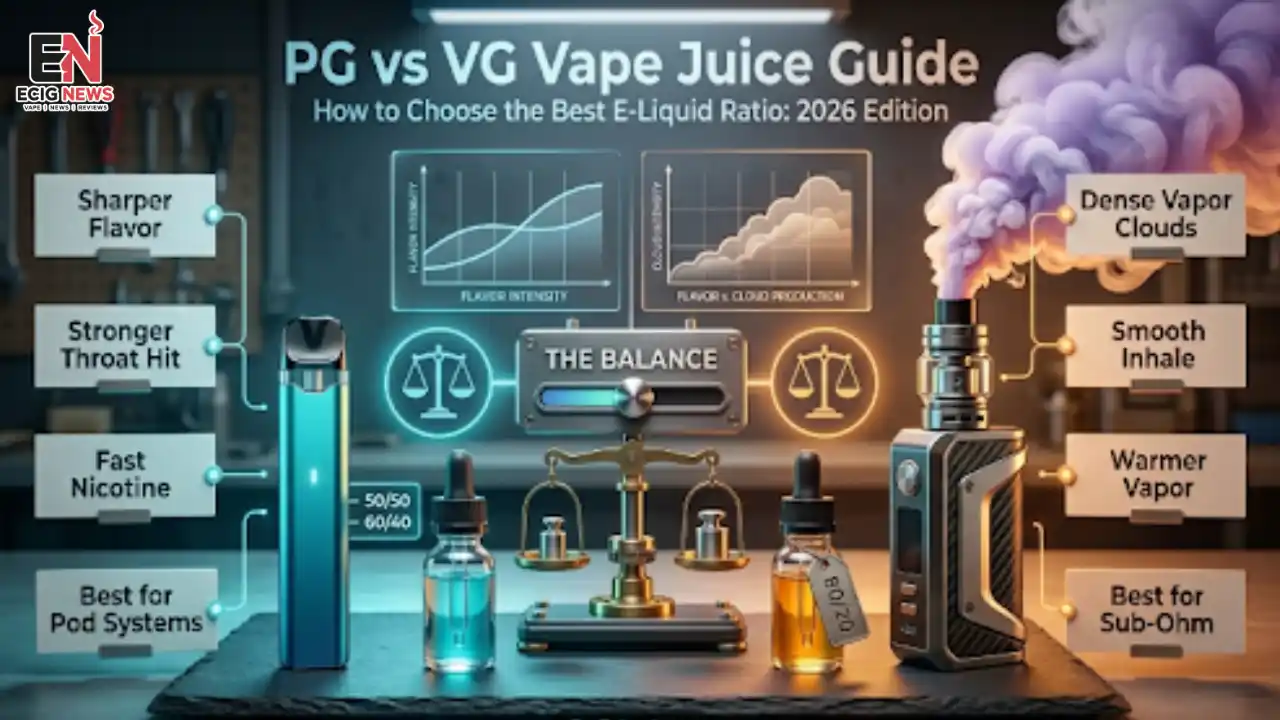
- Sharper flavour delivery
- Stronger throat hit
- Faster nicotine satisfaction
- Better performance in pod systems
- Less coil clogging
Many smokers who are switching to vaping prefer liquids with a high PG content. This is because they create a sensation that feels closer to smoking.
PG is also commonly found in:
- medicines
- food products
- cosmetics
A small number of users may experience mild throat irritation when using liquids with very high PG content. Understanding what is VG and PG can help you choose an e-liquid that works well with your device.
Understanding Vegetable Glycerin (VG)
Vegetable Glycerin is much thicker than PG and naturally has a slightly sweet taste.
Its primary job is to produce vapour.
Higher VG liquids create dense clouds and a smoother inhale.
Benefits of Higher VG Liquids
- Larger vapour clouds
- Softer throat hit
- Smoother inhalation
- Warmer vapour production
Because VG is thicker, it works best with larger coils and more powerful devices.
This is why sub-ohm tanks almost always use high-VG e-liquids. Before choosing an e-liquid, it is useful to know what is VG and PG and how each ingredient affects vapour and flavour.
How PG and VG Affect Vaping
Once you understand what is VG and PG, it becomes easier to compare different e-liquid ratios. The balance between PG and VG influences almost every aspect of the vaping experience. Understanding what is VG and PG helps you choose a liquid that matches your device, coil, and preferred vaping style.
Higher PG Ratios
Typically provide:
- stronger flavour
- stronger throat hit
- less vapour
- faster nicotine sensation
Higher VG Ratios
Typically provide:
- bigger clouds
- smoother vapour
- less throat hit
- softer flavour delivery
Neither option is better overall. Choosing the best VG PG ratio can help reduce dry hits and improve e-liquid wicking. The right choice depends entirely on your device and preferences.
Common PG/VG Ratios Explained
50/50 PG/VG
The most popular choice for beginners.
Benefits include:
- balanced flavour
- moderate vapour production
- smooth nicotine delivery
- compatibility with almost all pod systems
Most nicotine salt liquids use this ratio.
60/40 PG/VG
Offers slightly more throat hit and flavour intensity.
Ideal for:
- recent ex-smokers
- tighter MTL devices
- users wanting a stronger inhale
70/30 VG/PG
The most common ratio for sub-ohm vaping.
Provides:
- thicker clouds
- smoother draws
- warmer vapour
Best suited to powerful devices.
80/20 VG/PG
Designed mainly for cloud-focused vaping.
Provides:
- very dense vapour
- extremely smooth inhale
- Reduced throat hit
Requires advanced hardware.
100% VG
Used primarily by:
- users with PG sensitivity
- cloud enthusiasts
Produces maximum vapour but reduced flavour sharpness.
Best Ratios for Pod Systems
Pod systems work best with thinner e-liquids.
Recommended Ratios
- 50/50 PG/VG
- 60/40 PG/VG
These liquids wick efficiently through smaller coils.
Using thick 70/30 liquids in compact pod systems may cause:
- dry hits
- burnt coils
- poor flavour
- shortened coil lifespan
Best Ratios for Sub-Ohm Vaping
Sub-ohm devices require thicker liquids.
Recommended Ratio
- 70/30 VG/PG
This provides:
- smooth airflow
- dense vapour
- improved flavour consistency
Larger coils are specifically designed to handle thicker e-liquid.
Matching PG/VG Ratios to Your Vaping Style
Mouth-to-Lung (MTL) Vaping
Recommended ratios:
- 50/50
- 60/40
Best for:
- smokers switching to vaping
- nicotine salts
- tighter airflow
Direct-to-Lung (DTL) Vaping
Recommended ratio:
- 70/30
Best for:
- larger clouds
- lower nicotine strengths
- open airflow devices
Cloud Chasing
Recommended ratios:
- 80/20
- Max VG
Designed for:
- high-wattage vaping
- advanced devices
- maximum vapour production
Nicotine Salts and PG/VG Ratios
If you are unsure what is VG and PG, remember that PG is thinner and usually gives more flavour and throat hit, while VG is thicker and produces more vapour.Nicotine salts perform best in thinner liquids.
Most nic salt e-liquids use:
- 50/50 PG/VG
- 60/40 PG/VG
These ratios work perfectly in:
- pod systems
- starter kits
- low-powered devices
High-strength nicotine salts should never be used in powerful sub-ohm devices. The nicotine delivery becomes excessively strong. A balanced ratio can provide a smoother and more consistent experience. Choosing the right pg/vg ratio is important because different vape devices work better with specific liquid blends.
Potential Side Effects of PG and VG
Most users experience no issues, but occasional sensitivities can occur. Knowing what is VG and PG can help you choose a liquid that suits your device.
High PG Sensitivity
Some users may notice:
- throat irritation
- dryness
- coughing
Switching to a higher VG ratio often resolves the issue.
High VG Effects
VG can absorb moisture from the mouth and throat.
This may cause:
- dry mouth
- increased thirst
Staying hydrated usually solves the problem.
Quick Ratio Comparison Table
| Ratio | Best For | Device Type | Throat Hit | Vapour Production |
|---|---|---|---|---|
| 50/50 | Beginners | Pod Kits | Medium | Medium |
| 60/40 | Ex-Smokers | Pod Systems | Strong | Low |
| 70/30 | Sub-Ohm Users | DTL Devices | Mild | High |
| 80/20 | Cloud Chasers | Box Mods | Very Mild | Very High |
| 100% VG | PG Sensitivity | Advanced Setups | Minimal | Maximum |
Frequently Asked Questions
What PG VG ratio should beginners use?
Most new vapers should start with 50/50 because it works well in nearly all beginner-friendly pod systems.
Can I use 70/30 liquid in a pod kit?
Most pod kits are not designed for thick 70/30 liquids. Doing so can cause wicking issues and burnt coils.
Which ratio creates the biggest clouds?
80/20 and Max VG liquids produce the largest vapour clouds.
What ratio feels most like smoking?
50/50 and 60/40 liquids provide the strongest throat hit and most cigarette-like sensation.
Why does high VG feel smoother?
VG naturally softens the throat hit while producing denser vapour.
Final Thoughts
The PG/VG ratio you choose has a major impact on how your vape performs. Beginners often start with a 50/50 blend for simple pod vaping. The best VG PG ratio depends on your device, coil resistance, and preferred vaping style. A 50/50 blend is the safest starting point for most beginners. For most beginner pod users, a balanced vg/pg ratio such as 50/50 is a simple starting point. It delivers balanced flavour, reliable nicotine delivery, and excellent compatibility with pod systems.
Once you understand what is VG and PG, it becomes easier to choose between 50/50, 60/40, and higher-VG blends. As your vaping preferences evolve, you may choose higher VG liquids for smoother vapour and bigger clouds.
The key is simple:
- Match your e-liquid to your device.
- Match your nicotine strength to your needs.
- Avoid using thick liquids in small pod systems.
Getting these basics right will improve flavour, extend coil life, and make vaping far more enjoyable from day one.
You can also visit Ecig News to read more expert guides on vape devices, e-liquids, coils, and vaping trends.