By Ecig News
Vape Overview
The UK vaping industry is entering one of the most important regulatory periods it has ever experienced.
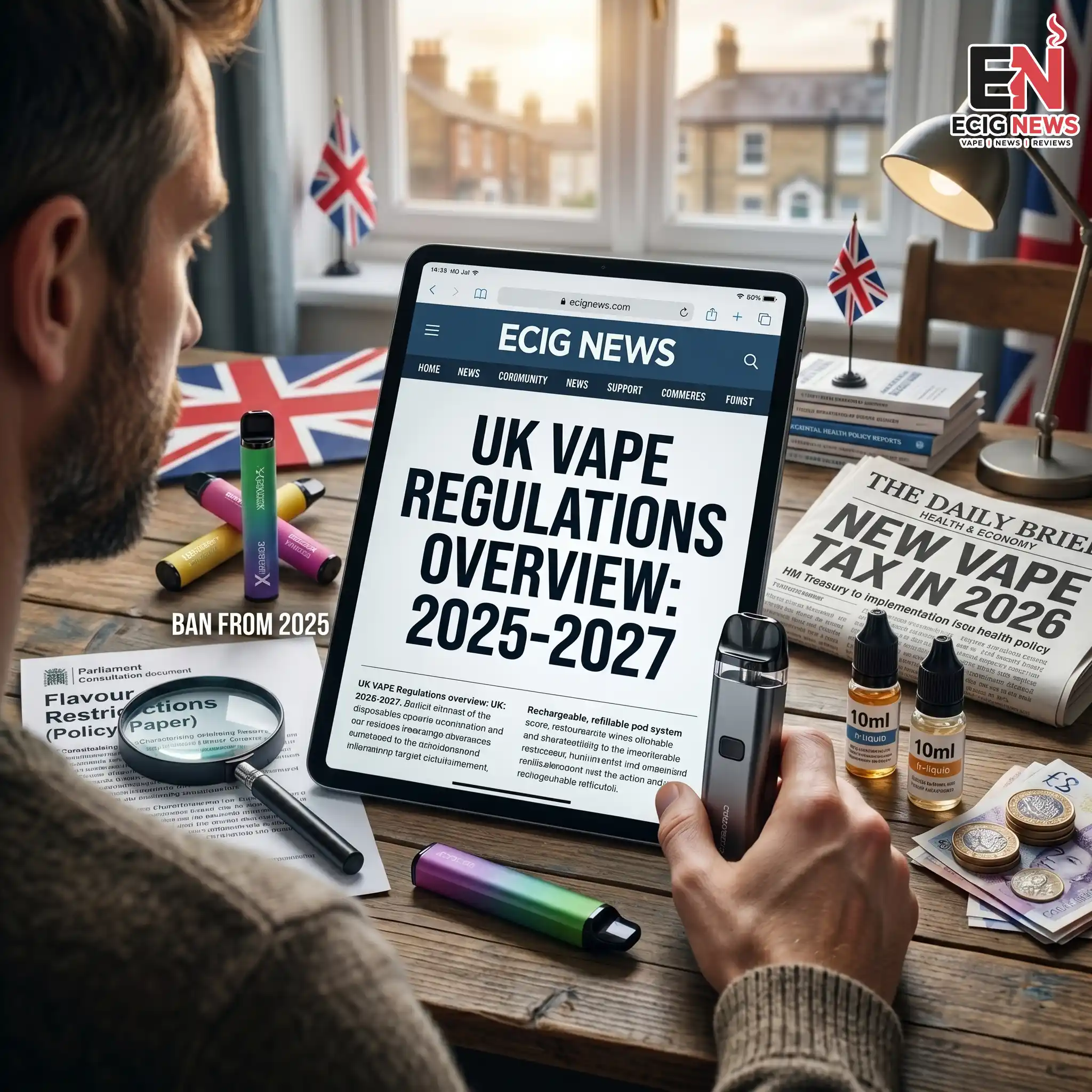
Between 2025 and 2027, several major vaping laws will be confirmed. Other restrictions are still being debated under government consultation.
Information spreads quickly online. As a result, many UK vapers are confused. They’re struggling to separate confirmed legislation from internet rumours. Some articles claim flavour bans are already happening. Others suggest vaping itself is being outlawed completely.
In reality, the situation is more complex.
The UK government still officially supports vaping as a smoking harm reduction tool for adults. This means new rules are coming.
This Ecig News guide explains the upcoming UK vape regulations clearly.
Table of Contents
- Why UK Vape Regulations Are Changing
- Understanding Confirmed vs Proposed Vape Laws
- Timeline of UK Vape Regulations Between 2025 and 2027
- The UK Disposable Vape Ban Explained
- Which Vape Products Will Still Remain Legal?
- Why Disposable Vapes Were Targeted
- The New UK Vape Tax in 2026
- How Much More Expensive Will Vaping Become?
- Vape Duty Stamps and Product Tracking
- Proposed Flavour Restrictions Explained
- Current UK Vape Laws Staying the Same
- How These Changes Affect Different Types of Vapers
- How UK Vape Laws Compare Internationally
- Final Thoughts on UK Vape Regulations
Why UK Vape Regulations Are Changing
The UK government says current vaping reforms focus mainly on two concerns:
- youth vaping growth
- environmental waste from disposables
Disposable devices became extremely popular because they were:
- cheap
- simple to use
- widely available
- heavily flavour-focused
Regulators argue these same factors also increased underage appeal.
Environmental concerns became another major issue.
Millions of single-use devices were being discarded weekly across Britain. This was before discussions about a potential ban on disposable vapes. Most contained lithium batteries and plastic waste that rarely entered proper recycling systems.
At the same time, UK public health authorities still generally support vaping. They view it as a lower-risk alternative for adult smokers compared to combustible cigarettes.
The government is not banning vaping entirely. Instead, the focus is shifting toward stricter regulation and tighter market control.
Understanding Confirmed vs Proposed Vape Laws
When discussing vaping online, it’s easy to get confused. People often mix up confirmed legislation with proposed policy ideas.
Not every proposal automatically becomes law.
Current UK vape discussions usually fall into three categories.
Confirmed Changes
These are official legal changes already approved and scheduled.
Proposed Changes
These ideas remain under consultation and could still change substantially.
Possible Future Restrictions
These are predictions or regulatory directions that could happen in the future. They are not yet official.
Understanding the difference is important. Online misinformation often exaggerates how aggressive UK vaping laws actually are.
Timeline of UK Vape Regulations Between 2025 and 2027
Several major changes are already confirmed for the British vape market.
Main Confirmed Changes
- disposable vape ban
- vape duty tax
- duty stamp verification systems
Other possible restrictions are still being debated and remain unconfirmed.
These include:
- flavour restrictions
- plain packaging
- stricter advertising controls
The UK Disposable Vape Ban Explained
The disposable vape ban represents one of the biggest confirmed vaping law changes in recent UK history.
From June 2025 onward, single-use disposable vape sales became illegal across the UK.
The ban applies specifically to devices that are:
- non-rechargeable
- non-refillable
This includes many standard disposable devices before dominating the UK market.
Products Still Remaining Legal
The law does not ban all vaping products.
Legal alternatives still include:
- refillable pod kits
- rechargeable vape devices
- prefilled pod systems
- refillable vape mods
- rechargeable high-puff devices
The regulation specifically targets single-use disposable products rather than vaping itself.
Which Vape Products Will Still Remain Legal?
Many adult vapers mistakenly assumed the disposable ban meant a total ban on all vaping products. That’s not the case. But that’s not true.
That is not the case.
The UK market is now shifting more heavily toward rechargeable systems.
Most Common Legal Alternatives
Prefilled Pod Kits
These remain beginner-friendly and convenient for users transitioning away from disposables.
Refillable Pod Systems
Refillable devices provide:
- lower running costs
- larger flavour variety
- better long-term value
Rechargeable Big Puff Devices
Some larger rechargeable devices remain legal. This is because they are rechargeable and refillable, not fully disposable.
The market is clearly moving toward reusable systems instead of single-use vaping products.
Why Disposable Vapes Were Targeted
The government introduced the disposable vape ban primarily because of:
- environmental concerns
- Youth Vaping Concerns
Before restrictions arrived, millions of disposables were reportedly discarded weekly throughout the UK.
These products often contained:
- lithium-ion batteries
- plastic waste
- electronic components
Most were not recycled correctly.
This created a situation where younger, more impressionable individuals were being targeted.
Whether you agree with these arguments or not, one thing is certain: the direction of UK regulation is now very clear.
The New UK Vape Tax in 2026
Another major confirmed regulation involves the upcoming vape duty tax arriving in October 2026.
This introduces a new:
- £2.20 tax per 10ml of e-liquid
The tax affects:
- nicotine salts
- freebase e-liquids
- bottled vape liquids
- prefilled vape products
This represents one of the largest financial changes UK vapers will face over the next several years.
How Much More Expensive Will Vaping Become?
Once VAT applies alongside the new vape tax, many products could become noticeably more expensive.
Example Cost Increase
| Product | Approximate Current Price | Possible Post-Tax Price |
|---|---|---|
| 10ml nic salt bottle | £4 | £6 or more |
Heavy daily users may spend hundreds of pounds more annually if their vaping habits remain unchanged.
Because of this, many UK users are already adjusting their setups before the tax arrives.
Ways Users Are Reducing Costs
- switching to refillable pod kits
- using coil-friendly liquids
- avoiding expensive disposables
- buying larger quantities where legal
- Reducing unnecessary pod replacements
Refillable systems will likely become even more financially important after the tax begins.
Vape Duty Stamps and Product Tracking
Another confirmed change involves vape duty stamp systems.
Gradually, between 2025 and 2027, legal UK vape products will require official duty stamp verification. This will be similar to the system used for tobacco products.
The goal is to:
- Reduce counterfeit products
- improve compliance monitoring
- strengthen product tracking
- Limit black market activity
By April 2027, all legally sold vape products in Britain are expected to include official duty verification systems.
Proposed Flavour Restrictions Explained
Flavour bans remain one of the most misunderstood vape topics online.
Despite social media rumours, flavour bans are not currently confirmed in UK law.
The government has discussed possible restrictions limiting flavours to simpler categories, such as:
- tobacco
- menthol
- mint
However, no final nationwide flavour ban currently exists.
Many adult ex-smokers say flavoured vapes helped them quit cigarettes. This is why the proposal remains highly controversial.
At this stage, flavour restrictions remain proposals rather than confirmed legislation.
Current UK Vape Laws Staying the Same
Despite major upcoming changes, several important UK vape rules remain unchanged.
Current regulations still include:
- greatest nicotine strength of 20mg/ml
- 2ml pod and tank capacity limits
- 10ml nicotine bottle limits
- MHRA registration requirements
- The minimum age restriction is 18+
All legal UK vape products must remain TPD compliant.
How These Changes Affect Different Types of Vapers
Different groups of users will experience these regulations differently.
Disposable Vape Users
Former disposable users will likely feel the biggest change. They must now move toward rechargeable alternatives.
Refillable Pod Users
Refillable users may already be in a stronger financial position. This is because refillable systems generally reduce long-term costs.
Heavy Vapers
Heavy users may feel the biggest financial impact once vape taxes increase in 2026.
Vape Retailers
Retailers will face growing pressure around:
- compliance management
- product verification
- stock control
- regulatory monitoring
Final Thoughts on UK Vape Regulations
The UK vape market is clearly entering a far more regulated era.
Several things are now certain:
- Disposable vape sales are ending
- Vaping costs will increase
- Compliance rules will become stricter
- Rechargeable systems are becoming the market standard
At the same time, many feared restrictions, including nationwide flavour bans, have not yet been passed into law. They currently remain as proposals.
These setups generally provide:
- lower long-term costs
- better flexibility
- easier adaptation to future regulations
At Ecig News, we continue tracking every major UK vaping law update. Our goal is to help adult users understand what is genuinely changing. We want to help you avoid the confusion caused by online rumours and misinformation.
Explore more from Ecig News: