
By Ecig News
What You Need to Know
Rechargeable vape devices have become the standard across the UK vaping market. These include pod kits, vape mods, and other similar devices. These devices are typically powered by lithium-ion batteries.
In a worst-case scenario, this can lead to fires and explosions. These bad habits can shorten your battery’s lifespan.
Many battery-related vape problems are not caused by manufacturing defects. They usually happen because users ignore simple maintenance practices. Or they develop unsafe charging routines.
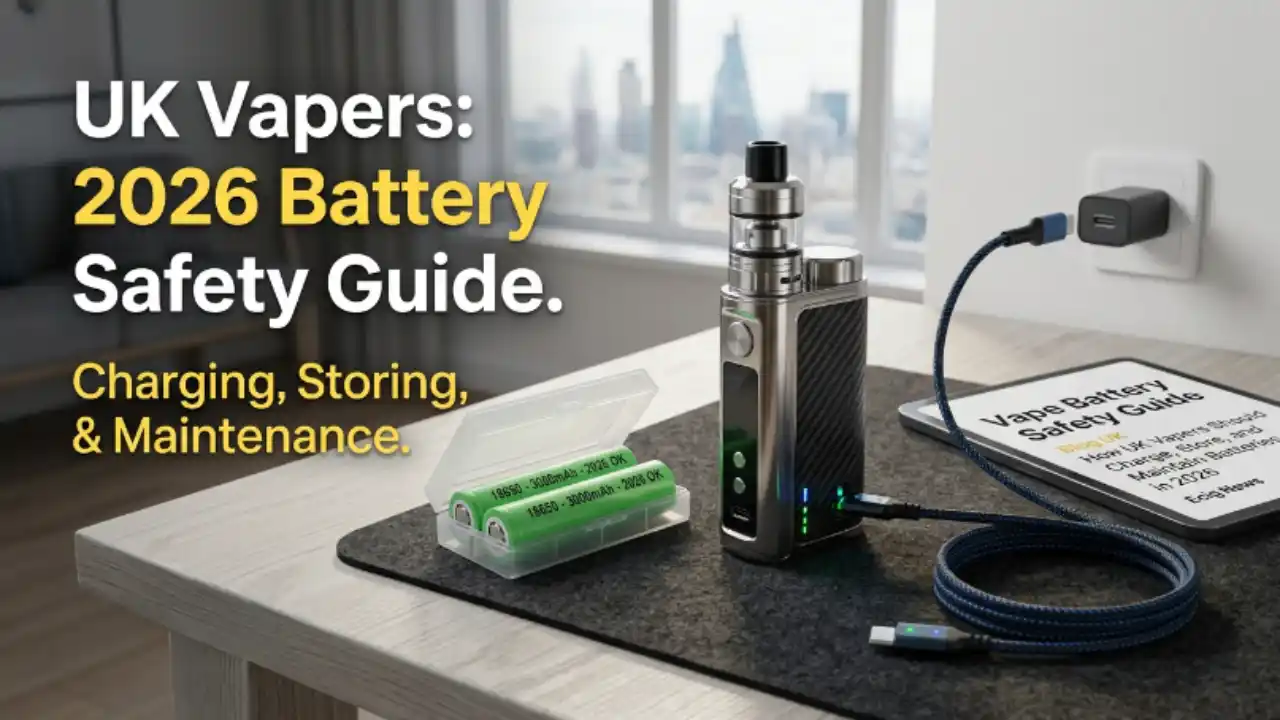
This Ecig News guide explains how vape batteries work and how to charge them safely. We’ll also cover how to extend battery lifespan and the warning signs UK vapers should never ignore in 2026.
Table of Contents
- Why Vape Battery Safety Matters
- Understanding Different Vape Battery Types
- How Long Do Vape Batteries Usually Last
- Correct Ways to Charge Vape Batteries
- Charging Mistakes That Damage Batteries
- Safe Vape Battery Storage Tips
- How to Improve Battery Lifespan
- Warning Signs of Battery Problems
- When to Replace Your Vape Battery
- Common Vape Battery Mistakes
- Safe Battery Disposal in the UK
- Frequently Asked Questions
- Final Thoughts on Vape Battery Safety
Why Vape Battery Safety Matters
Most modern vape devices use rechargeable lithium-ion batteries.
These batteries provide reliable performance when handled properly. However, poor habits can gradually damage battery cells and reduce safety over time.
Battery issues usually develop because of:
- incorrect charging
- overheating
- physical damage
- poor storage conditions
- low-quality accessories
Simple mistakes repeated daily can slowly weaken battery performance without users noticing immediately.
The good news is that most vape battery problems are preventable. It just takes consistent maintenance and safer charging habits.
Understanding Different Vape Battery Types
Not all vape batteries work the same way.
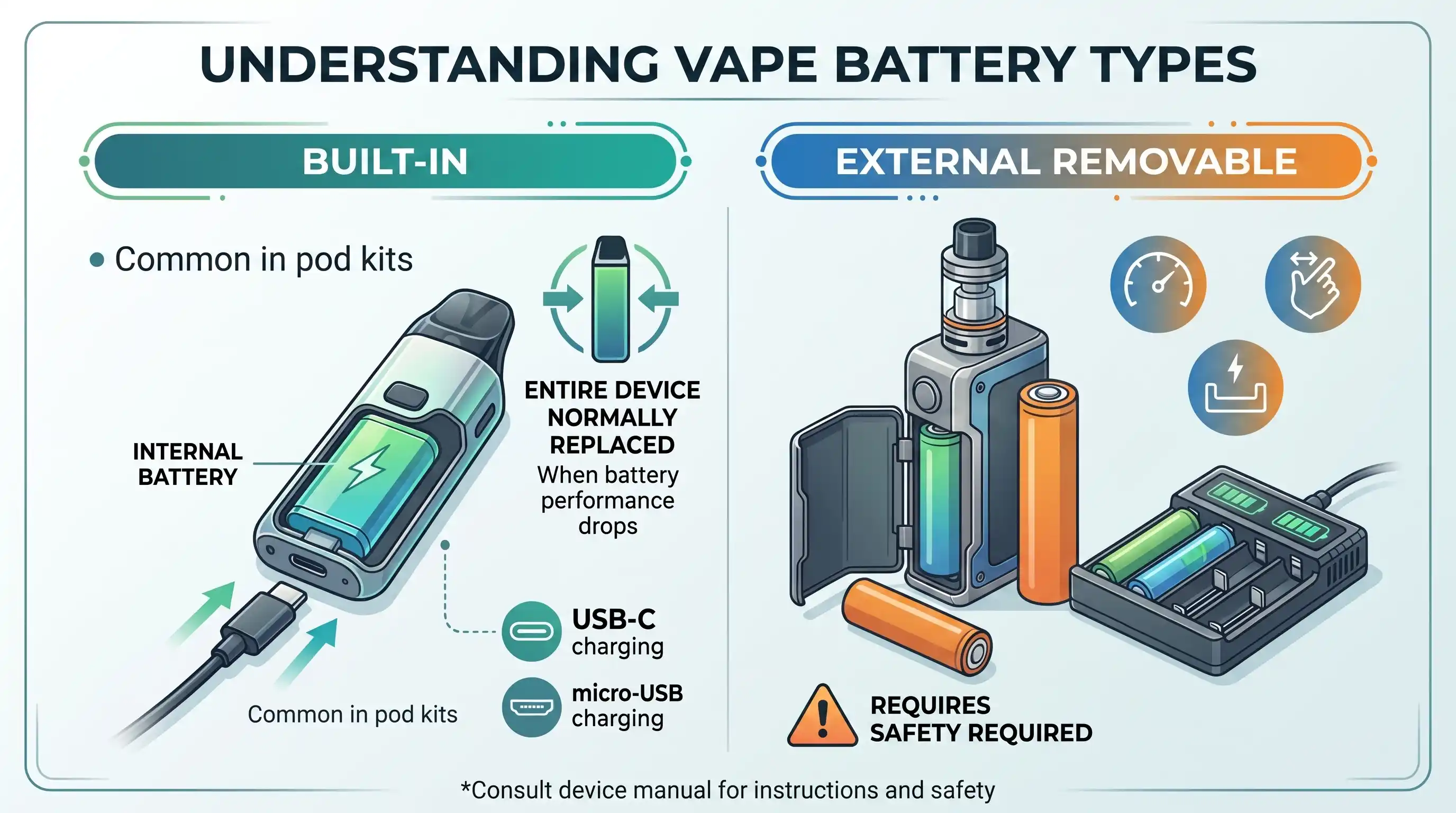
Built-In Vape Batteries
Many beginner pod kits contain internal batteries that cannot be removed.
These devices charge directly using:
- USB-C charging
- micro-USB charging
Once battery performance drops significantly, the entire device normally gets replaced.
Built-in battery devices remain popular because they are:
- simple
- compact
- beginner-friendly
- low maintenance
External Removable Batteries
Advanced vape mods often use removable lithium-ion cells.
Common battery types include:
- 18650 batteries
- 21700 batteries
These batteries can be removed and charged separately using external battery chargers.
- Removable batteries offer more flexibility and stronger performance.
- However, they require greater attention to safety and maintenance.
How Long Do Vape Batteries Usually Last
Most lithium-ion vape batteries last between:
- 300 to 500 charge cycles
For regular UK vapers, this usually translates to approximately:
- one to two years of usage
Battery lifespan depends heavily on charging habits and device care.
Poor charging routines may reduce the lifespan much faster.
Signs of ageing batteries often include:
- shorter usage time
- slower charging
- overheating
- unstable performance
Replacing batteries before serious deterioration improves both safety and device reliability.
Correct Ways to Charge Vape Batteries
Charging habits directly affect battery health.
Use The Correct Charger
Always use:
- manufacturer-approved chargers,
- reliable replacement cables
Cheap or unregulated charging equipment may damage battery cells gradually.
Charge on Hard Surfaces
Always charge vape devices on flat, ventilated surfaces.
Avoid charging on:
- beds
- sofas
- blankets
- carpets
Soft surfaces trap heat and reduce airflow around the battery.
Avoid Excessive Heat During Charging
If your vape becomes unusually hot while charging, disconnect it immediately and inspect the device.
Some warmth is normal, but excessive heat should never be ignored.
Avoid Constant Full Charges
Lithium-ion batteries generally last longer when kept between roughly:
- 20% and 80% charge
Repeatedly charging batteries to maximum capacity every single time may accelerate long-term wear.
Charging Mistakes That Damage Batteries
Many battery problems begin with everyday charging mistakes.
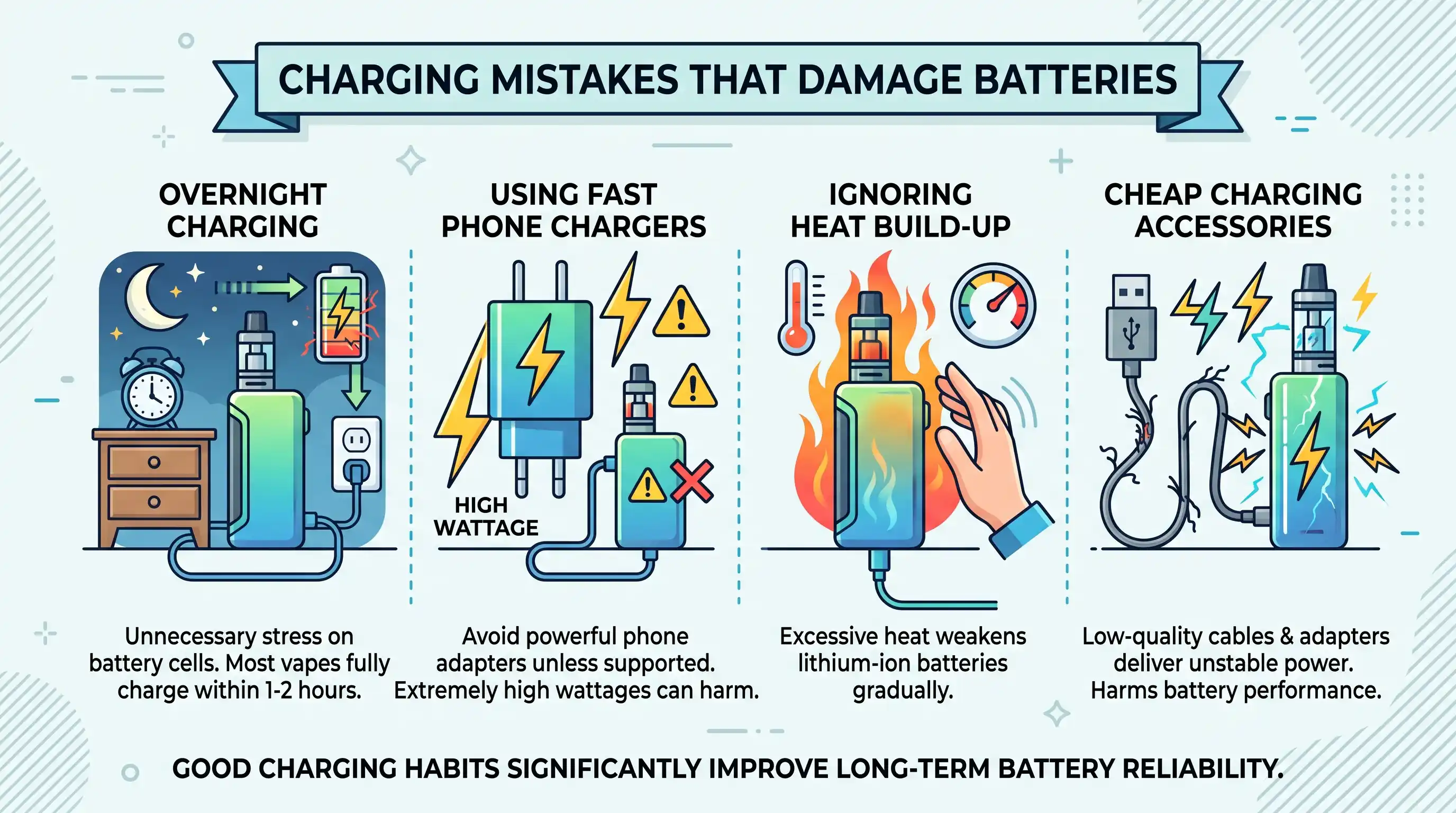
Overnight Charging
Leaving a vape plugged in overnight repeatedly increases unnecessary stress on battery cells.
Most vape devices charge fully within one or two hours.
Using Fast Phone Chargers
Modern smartphone chargers sometimes use extremely high charging wattages.
Unless your vape specifically supports fast charging, avoid using powerful phone adapters.
Ignoring Heat Build-Up
Excessive charging weakens lithium-ion batteries gradually.
Cheap Charging Accessories
Low-quality cables and adapters may deliver unstable power that harms battery performance.
Good charging habits significantly improve long-term battery reliability.
Safe Vape Battery Storage Tips
Battery safety continues even when devices are not actively being used.
Use Protective Battery Cases
Loose removable batteries should never sit inside pockets or bags.
Metal objects like:
- keys
- coins
- jewellery
Can touch battery terminals and create dangerous short circuits.
Protective battery cases remain essential for carrying spare cells safely.
Keep Devices Away From Heat
High temperatures damage lithium-ion chemistry quickly.
Never leave vape devices:
- inside hot vehicles
- near radiators
- under direct sunlight for extended periods
Avoid Damp Environments
Moisture can corrode battery terminals and connection points.
Store vape devices in cool, dry indoor locations whenever possible.
Store Batteries Partially Charged
Long-term storage works best when batteries remain partially charged instead of empty.
How to Improve Battery Lifespan
Small maintenance routines can improve battery performance dramatically.
Clean Battery Contacts
Dust and e-liquid residue can build up around battery connection points.
Use a dry cotton swab periodically to clean contacts gently.
Avoid Chain Vaping
Continuous heavy vaping generates extra heat that stresses batteries unnecessarily.
Allow short breaks between longer sessions whenever possible.
Avoid Fully Draining Batteries
Completely draining lithium-ion batteries regularly reduces their lifespan over time.
Charging earlier helps preserve long-term battery health.
Inspect Battery Wraps
Removable batteries use protective plastic wraps for insulation.
Replace batteries immediately if wraps become:
- torn
- peeling
- scratched
- damaged
Damaged wraps increase short-circuit risk significantly.
Warning Signs of Battery Problems
Battery issues usually show warning signs before complete failure occurs.
Rapid Battery Drain
Sudden loss of battery life may indicate ageing or internal damage.
Excessive Heat
Devices becoming unusually hot while idle or charging should be checked immediately.
Swollen Batteries
Battery swelling represents a serious safety concern.
Stop using swollen batteries immediately and dispose of them safely.
Strange Smells
Burning or chemical smells coming from the battery area should never be ignored.
Visible Physical Damage
Dents, corrosion, leaks, or torn wraps usually mean replacement is necessary.
When to Replace Your Vape Battery
Removable vape batteries should generally be replaced after:
- 12 to 18 months of regular use
Always buy authentic batteries from reputable brands.
Popular trusted manufacturers include:
- Samsung
- Sony
- LG
- Molicel
Users with dual-battery mods should replace both batteries together rather than mixing old and new cells.
Matching battery age and performance improves safety and device stability.
Common Vape Battery Mistakes
Most battery-related problems happen because of avoidable user habits.
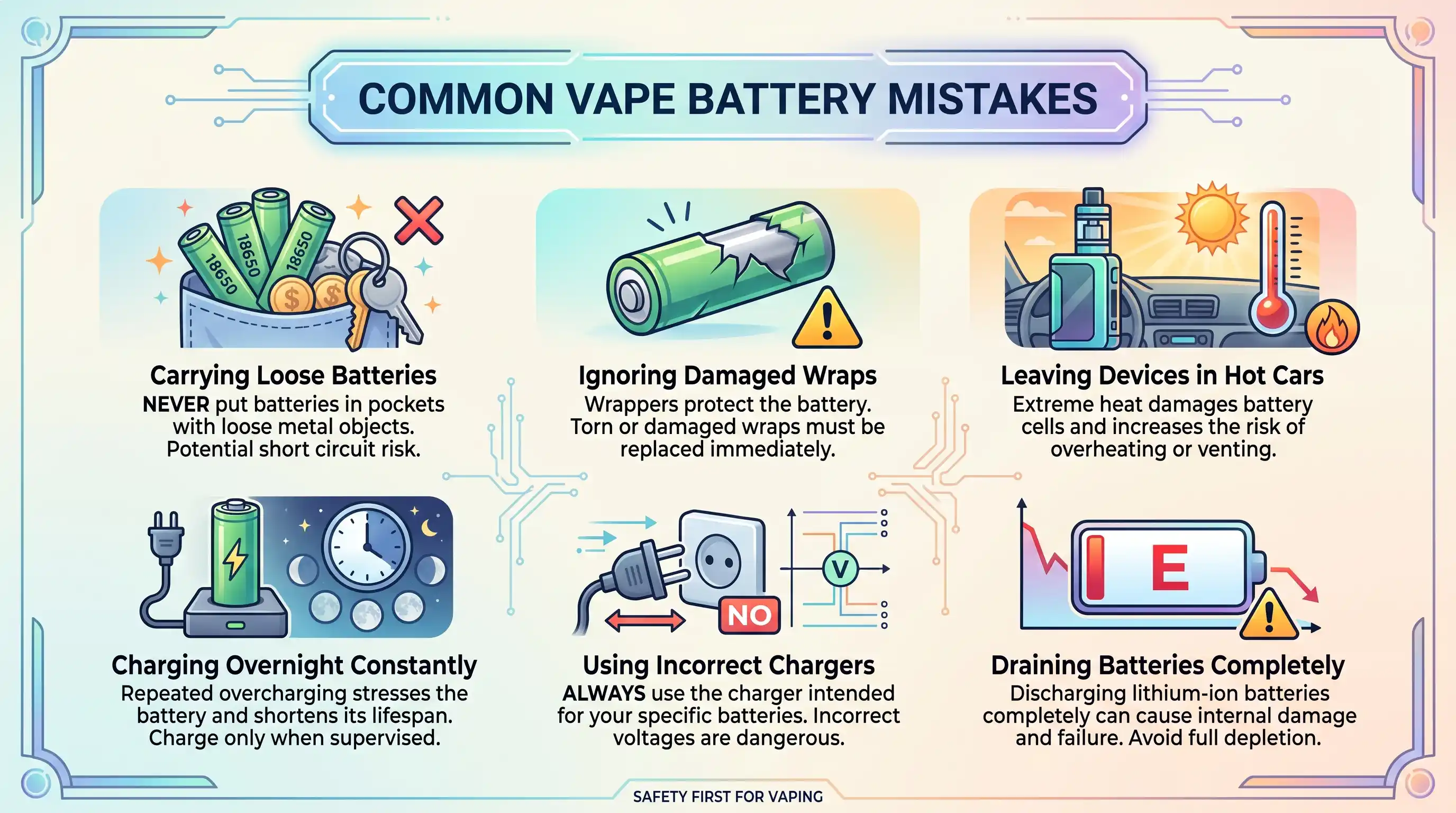
Carrying Loose Batteries
Always use battery cases.
Ignoring Damaged Wraps
Even small tears can become dangerous.
Leaving Devices in Hot Cars
Heat permanently damages battery cells.
Charging Overnight Constantly
Repeated overnight charging accelerates battery wear.
Using Incorrect Chargers
Improper charging equipment often shortens battery lifespan.
Draining Batteries Completely
Frequent full discharge cycles stress lithium-ion cells unnecessarily.
Safe Battery Disposal in the UK
Old or damaged vape batteries should never be thrown into standard household bins.
Safe UK disposal options include:
- Tesco recycling points
- Currys battery bins
- local council recycling centres
- participating vape shops
Handling Damaged Batteries
If a battery is swollen or damaged, handle it with extra care.
When transporting it, place it in a fire-resistant or non-conductive container if you can.
Frequently Asked Questions
How long do vape batteries last?
Most lithium-ion vape batteries last roughly one to two years, depending on usage and maintenance habits.
Is overnight vape charging safe?
Charging your vape overnight occasionally may not cause immediate damage. However, doing so repeatedly can increase long-term stress on the battery.
Why does my vape battery drain quickly?
Possible causes include:
- high wattage usage
- ageing battery cells
- dirty contacts
- poor charging habits
Can I use my phone charger for my vape?
Low-power chargers are usually acceptable if compatible. Fast chargers should only be used if officially supported by the vape device.
What should I do if my battery swells?
Stop using the device immediately and dispose of the battery safely through a proper UK recycling facility.
Final Thoughts on Vape Battery Safety
Good vape battery safety mostly comes down to consistency.
Simple habits like:
- charging correctly
- storing devices safely
- avoiding overheating
- Replacing damaged batteries early
can dramatically improve both battery lifespan and vaping safety.
Most battery failures develop gradually rather than instantly. Users who pay attention to warning signs and follow safer charging practices can prevent most issues.
This way, you can usually avoid serious problems entirely.
At Ecig News, we continue covering vape maintenance, battery safety, pod system care, and UK vaping regulations. Our goal is to help adult vapers stay informed and vape more safely in 2026.